Museum-Quality Antique Russian Glass Easter Egg Circa 1770 | Imperial Russian Court
Museum-Quality Antique Russian Glass Easter Egg Circa 1770 | Imperial Russian Court
Couldn't load pickup availability
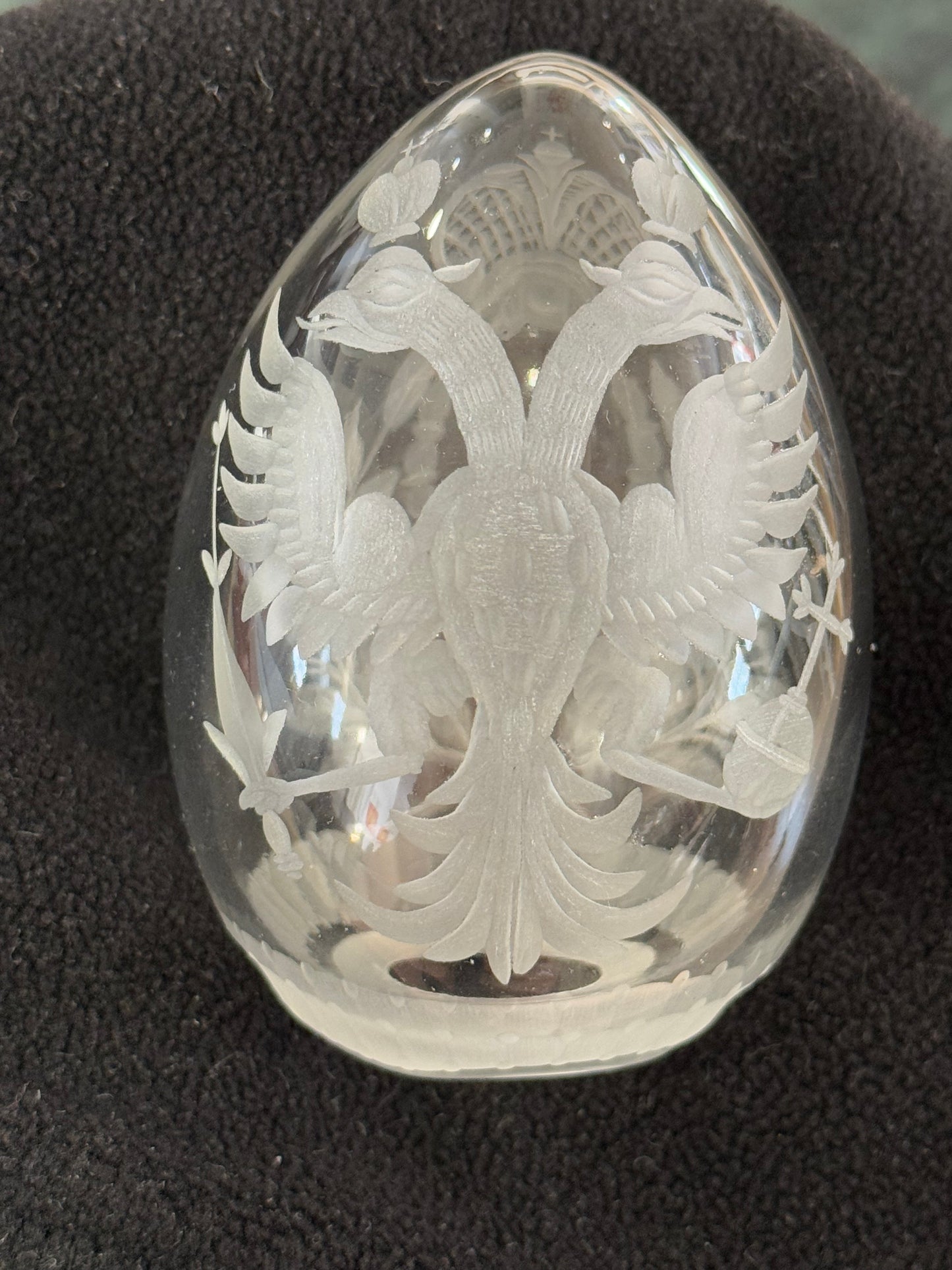
This exceptional antique Russian glass Easter egg, dating to circa 1770, is a rare and captivating example of 18th-century Imperial craftsmanship. Executed in finely blown, translucent glass, the egg is masterfully engraved on both sides with Imperial Russian insignia, employing a sophisticated see-through optical illusion that is as playful as it is technically impressive.
The front of the egg features the Russian Imperial double-headed eagle, engraved with remarkable precision. Traditionally crowned with two smaller crowns surmounted by a larger imperial crown, the eagle on this egg bears only two crowns—a deliberate artistic decision that reveals its full meaning only through the glass.
The reverse displays an oval medallion, surmounted by an Imperial crown and flanked by two laurel branches, symbols of authority and victory. Through the transparency of the glass, the larger crown engraved on the reverse aligns visually with the eagle on the front, completing the heraldic composition and appearing as the third crown above the eagle’s heads. This intentional trompe-l’œil effect demonstrates extraordinary foresight and artistic mastery.
At a specific viewing angle, the illusion deepens further: the eagle engraved on the front appears to zoom out and fit perfectly within the oval medallion on the reverse, aligning seamlessly with its frame and crowned top. This playful visual transformation strongly suggests the egg was designed to amuse and delight, intended for intimate handling rather than passive display.
The presence of unmistakable Imperial insignia strongly indicates that this egg was produced for the Tsarist Court. Given its date, symbolism, and level of artistry, it is entirely plausible that such an object was created as an Easter gift within the Imperial household, possibly during the reign of Empress Catherine II (the Great)—a period known for its patronage of innovative decorative arts and optical curiosities.
Collector’s Provenance & Rarity Statement
Antique Russian glass Easter eggs from the 18th century are exceedingly rare, particularly examples bearing Imperial heraldry and employing complex optical illusions. Unlike later Imperial objects of the 19th century, which were often produced in workshops with recognized signatures or marks, early court glass objects were typically unmarked, custom-commissioned pieces, created in extremely limited numbers for private court use.
Surviving examples from this period are scarce due to the inherent fragility of glass, the passage of time, and the profound disruptions to Imperial collections following the Russian Revolution. Pieces combining see-through engraving, dual-sided illusion design, and Imperial symbolism are virtually unknown in the marketplace today.
This egg represents a museum-quality survivor, suitable for inclusion in an advanced collection of Imperial Russian decorative arts or for institutional exhibition. Its artistry, historical context, and playful sophistication place it firmly within the elite tradition of court-commissioned objects created for intellectual delight as well as ceremonial significance.
Details
- Origin: Imperial Russia
- Date: Circa 1770
- Material: Hand-blown engraved glass
- Height: 3.5 inches
- Width: 2.5 inches
- Weight: 146 grams
A remarkable and rare artifact of Imperial Russia, this glass Easter egg stands as a testament to 18th-century courtly refinement, artistic ingenuity, and the enduring fascination of objects created to surprise, delight, and endure.
Share